
This blog break has been a little longer than I anticipated, but I plan on getting back to some more science posts this week. Our twins were born January 8, I turned in the final, corrected copy of my doctoral thesis on January 16th (my defense was in December), we packed up our stuff and left NY with a Penske truck on January 26th, and finally arrived at our new home in St. Louis on January 28th. I started my postdoc position at the Center for Genome Sciences at the Wash. U. School of Medicine on Feb. 1.
Now that our family's recovered a bit from that last insane month, it's time to get back to some of the interesting things that are going on in biology. The next installment on the dog genome should be up by Thursday.
Tuesday, March 07, 2006


Thursday, January 05, 2006
This blog's not dead yet!
Don't worry, this fledgling blog has not ceased operation. Between the holiday rush and associated family visits, preparations for our move to my postdoc position, and preparations for the arrival of our twins, I've slowed down here.
I still have future posts planned about the cool things discovered through the dog genome sequence, the Science paper on the membrane protein apparently responsible for skin pigmentation in humans, what yeast genetics tells us about the evolution of biochemical 'machines', and plenty of other fun things.
I'll be back...
I still have future posts planned about the cool things discovered through the dog genome sequence, the Science paper on the membrane protein apparently responsible for skin pigmentation in humans, what yeast genetics tells us about the evolution of biochemical 'machines', and plenty of other fun things.
I'll be back...
Saturday, December 24, 2005
A Non-believer's Take on Christmas
This doesn't really have much to do with biology, except that many purveyors of Intelligent Design are also partisans in the made-up War on Christmas (a feint by right-wingers who know they are losing their War on Pluarlity and Tolerance). The latest example of this is in NY Times columnist Maureen Dowd's Christmas Eve column, which was actually written by her right-wing brother Kevin. He goes off on 'Happy Holidays', Tookie Williams, Michael Moore, the War in Iraq, and of course, Judge Jones and intelligent design. There seems to be no coherent intellectual common denominator underlying all of this except the idea that Liberals are plotting to destroy good ol' Christian America. I'd think that Kevin Dowd was nuttier than a jar of Jiff, if it weren't for the fact that many people very dear to me also share these beliefs to the letter, and I know this comes from a deeply felt frustration.
People like Kevin label non-believers like me as the ten percent of the American population who "don't believe anything at all." Let's leave aside the fact that I'd rather not "believe in anything at all" than buy into the mindless demagoguery echoed by people who let Bill O'Reilly do their thinking for them; here's what I as a non-believer believe about Jesus and Christmas:
I don't worship Jesus, I don't believe in him as my savior, and I don't believe he came to this world to warn us all not to get Left Behind. As beautiful as I find the Hallelujah chorus, I do not believe that "the kingdom of this world [will] become the kingdom of our Lord and of his Christ, and he shall reign for ever and ever" as "King of Kings and Lord of Lords." Nor do I think he was the one greatest philosopher or wise man in history.
I do love Jesus though - the Jesus of the Synoptic Gospels, the Jesus who stands up to the religious hard-liners of his day, the Jesus who deflates the pretensions of the Pharisees by associating with the 'unclean' of society, the Jesus who said "there is nothing outside a person that by going in can defile, but the things that come out are what defile," the Jesus who chastised those who exploit the sacred for profit by making a house of prayer a den of robbers. The parable of the Good Samaritan resonates with my evolutionary belief in the universal kinship of all people and all life.
What message is more important to this world today - in an Iraq devastated by neo-Conservative machinations to make over the Middle East, as well as the inane jihad by cold-blooded Islamic terrorists (non-combatant civilian deaths equaling more than 40 9-11's), in a Sudan stained by genocide, in a Europe fractured by ethnic strife, and in an America which watched the poor, black, and sick of New Orleans drown while the white suburbanites got out - what message is more important? That Jesus died for your sins and that you too can go to heaven if you just accept his grace (and if you don't you'll burn in hell)? Or that we should not judge, "and you will not be judged; do not condemn, and you will not be condemned. Forgive, and you will be forgiven; give, and it will be given unto you. A good measure, pressed down, shaken together, running over, will be put into your lap; for the measure you give will be the measure you give back."
There has never been a better statement of the Golden Rule; that's this non-believer's take on Christmas and why I believe in it, so to Kevin Dowd and everyone else,
Merry Christmas.
People like Kevin label non-believers like me as the ten percent of the American population who "don't believe anything at all." Let's leave aside the fact that I'd rather not "believe in anything at all" than buy into the mindless demagoguery echoed by people who let Bill O'Reilly do their thinking for them; here's what I as a non-believer believe about Jesus and Christmas:
I don't worship Jesus, I don't believe in him as my savior, and I don't believe he came to this world to warn us all not to get Left Behind. As beautiful as I find the Hallelujah chorus, I do not believe that "the kingdom of this world [will] become the kingdom of our Lord and of his Christ, and he shall reign for ever and ever" as "King of Kings and Lord of Lords." Nor do I think he was the one greatest philosopher or wise man in history.
I do love Jesus though - the Jesus of the Synoptic Gospels, the Jesus who stands up to the religious hard-liners of his day, the Jesus who deflates the pretensions of the Pharisees by associating with the 'unclean' of society, the Jesus who said "there is nothing outside a person that by going in can defile, but the things that come out are what defile," the Jesus who chastised those who exploit the sacred for profit by making a house of prayer a den of robbers. The parable of the Good Samaritan resonates with my evolutionary belief in the universal kinship of all people and all life.
What message is more important to this world today - in an Iraq devastated by neo-Conservative machinations to make over the Middle East, as well as the inane jihad by cold-blooded Islamic terrorists (non-combatant civilian deaths equaling more than 40 9-11's), in a Sudan stained by genocide, in a Europe fractured by ethnic strife, and in an America which watched the poor, black, and sick of New Orleans drown while the white suburbanites got out - what message is more important? That Jesus died for your sins and that you too can go to heaven if you just accept his grace (and if you don't you'll burn in hell)? Or that we should not judge, "and you will not be judged; do not condemn, and you will not be condemned. Forgive, and you will be forgiven; give, and it will be given unto you. A good measure, pressed down, shaken together, running over, will be put into your lap; for the measure you give will be the measure you give back."
There has never been a better statement of the Golden Rule; that's this non-believer's take on Christmas and why I believe in it, so to Kevin Dowd and everyone else,
Merry Christmas.
Thursday, December 22, 2005
The Dog Genome - part 1 Why sequence genomes?
I was excited to see the paper on the dog genome in the Dec. 8 issue of Nature. These genome papers offer so many interesting insights about many different aspects of biology - in fact, genome sequencing touches on so many different fields that it's worth reviewing why we sequence genomes. Genome sequencing is a resource-intensive effort, so it's important to understand why this effort is justified.
Molecular Biology: Molecular biologists have long sought to understand the structure and function of the molecular parts of the cell. Like physiologists who study whole organisms, molecular biologists want to know what everything in the cell does. Ideally, we would like to determine the function(s) of every protein made in an organism, the 3-D structure of each of these proteins, the conditions under which these proteins are expressed, how they interact with each other and the non-protein parts of the cell, which portions of our DNA contain regulatory sequences that control gene expression and how those sequences work, etc. etc. In other words, we want to a complete mechanistic picture of the cell.
To even come close to this goal, we must know the DNA sequence of the genome, because every protein and RNA component of the cell is coded by our DNA. By having a genome sequence, we basically have a complete parts list for the cell, even if we don't completely know how to read that list yet. With this parts list, one can make a complete collection of protein-coding genes in an experimentally useful form, and then study those genes systematically. (In a shameless act of self-promotion, I recommend you check out this relevant abstract recently published by our group.) This type of approach has been extensively used in yeast, but can also work for human genes. Another application is the creation of DNA chips, or microarrays, which have been tremendously useful in recent years. Without genome sequences, we could not build these collections and perform such genome-wide experiments.
An advantage of sequencing multiple mammalian genomes (human, chimp, mouse, rat, and now dog), is that we can compare them. This is useful for evolutionary studies (which I'll get to in the next post), but it is also crucial for those purely interested in mechanistic molecular biology. Identifying functionally important portions of a single genome is extremely difficult. Even protein-coding genes are hard to identify. Protein coding genes start with the DNA sequence ATG and end with TAG, TAA, or TGA, with a stretch of DNA in between coding for the amino acids of the protein, like this gene for the human cannabinoid receptor-1, which is the receptor acted on by the major active component of marijuana:
ATGAAGTCGATCCTAGATGGCCTTGCAGATAC
CACCTTCCGCACCATCACCACTGACCTCCTGTACGTGGG
CTCAAATGACATTCAGTACGAAGACATCAAAGGTGACAT
GGCATCCAAATTAGGGTACTTCCCACAGAAATTCCCTTT
AACTTCCTTTAGGGGAAGTCCCTTCCAAGAGAAGATGAC
TGCGGGAGACAACCCCCAGCTAGTCCCAGCAGACCAGGT
GAACATTACAGAATTTTACAACAAGTCTCTCTCGTCCTTC
AAGGAGAATGAGGAGAACATCCAGTGTGGGGAGAACTTC
ATGGACATAGAGTGTTTCATGGTCCTGAACCCCAGCCAG
CAGCTGGCCATTGCAGTCCTGTCCCTCACGCTGGGCACC
TTCACGGTCCTGGAGAACCTCCTGGTGCTGTGCGTCATC
CTCCACTCCCGCAGCCTCCGCTGCAGGCCTTCCTACCAC
TTCATCGGCAGCCTGGCGGTGGCAGACCTCCTGGGGAGT
GTCATTTTTGTCTACAGCTTCATTGACTTCCACGTGTTCC
ACCGCAAAGATAGCCGCAACGTGTTTCTGTTCAAACTGG
GTGGGGTCACGGCCTCCTTCACTGCCTCCGTGGGCAGCC
TGTTCCTCACAGCCATCGACAGGTACATATCCATTCACAG
GCCCCTGGCCTATAAGAGGATTGTCACCAGGCCCAAGGC
CGTGGTGGCGTTTTGCCTGATGTGGACCATAGCCATTGTG
ATCGCCGTGCTGCCTCTCCTGGGCTGGAACTGCGAGAAAC
TGCAATCTGTTTGCTCAGACATTTTCCCACACATTGATGAA
ACCTACCTGATGTTCTGGATCGGGGTCACCAGCGTACTGCT
TCTGTTCATCGTGTATGCGTACATGTATATTCTCTGGAAGG
CTCACAGCCACGCCGTCCGCATGATTCAGCGTGGCACCCAG
AAGAGCATCATCATCCACACGTCTGAGGATGGGAAGGTACA
GGTGACCCGGCCAGACCAAGCCCGCATGGACATTAGGTTAG
CCAAGACCCTGGTCCTGATCCTGGTGGTGTTGATCATCTGCT
GGGGCCCTCTGCTTGCAATCATGGTGTATGATGTCTTTGGGA
AGATGAACAAGCTCATTAAGACGGTGTTTGCATTCTGCAGTA
TGCTCTGCCTGCTGAACTCCACCGTGAACCCCATCATCTATG
CTCTGAGGAGTAAGGACCTGCGACACGCTTTCCGGAGCATGT
TTCCCTCTTGTGAAGGCACTGCGCAGCCTCTGGATAACAGCA
TGGGGGACTCGGACTGCCTGCACAAACACGCAAACAATGCAG
CCAGTGTTCACAGGGCCGCAGAAAGCTGCATCAAGAGCACGG
TCAAGATTGCCAAGGTAACCATGTCTGTGTCCACAGACACGT
CTGCCGAGGCTCTGTGA
The hard part is that not all DNA sequences that fit those criteria are actually protein coding genes - some DNA sequences look like protein coding genes, but they really aren't.
Furthermore, functionally important DNA sequences that do not code for proteins don't start with ATG and end with TAG, TAA or TGA. We can't identify these sites by just looking for certain features in a single genome. This is where genome sequencing is useful - to identify functionally important portions of our genome, whether they code for protein or not, we can compare genomes of related organisms at various evolutionary distances from ours. Because of evolution, genomes change; those parts that are not functionally important can usually change without adverse consequences for the fitness of the organism, while the parts that are functionally important will generally be constrained. So you can compare genomes of various organisms and look for those parts that haven't changed very much; this is a major clue that these parts are authentic functional sequences. If a DNA sequence starts with ATG and ends with TGA, but is poorly conserved among different species, this may not be a true protein coding gene. (On the other hand, it could be a rapidly evolving gene involved in a function like reproduction or the immune system; there are way to test for this.) If a non-coding DNA sequence close to a protein-coding gene is very similar among different species, this sequence could be involved in regulating the nearby protein-coding gene. (Keep in mind, I'm really simplifying things, but this is the basic idea behind comparative genomics.) This is illustrated in the following schematic:
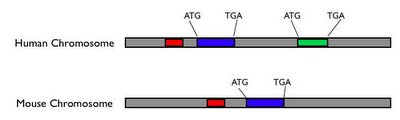
Potential protein-coding genes start with ATG and and with TGA; the blue gene is conserved between human and mouse, while the green gene is not. The blue gene is probably an authentic protein-coding gene, while the green one may not be. The red sequence is not a protein coding sequence, but it is conserved between mouse and human, thus it may be functionally important.
One important problem is choosing the right organisms. Let's say that we're comparing the chimp genome with the human genome and we find a region of DNA that is very similar in the two genomes. It's possible that this region is similar because it is functionally important, or it could be that this region simply hasn't changed much yet because humans and chimps diverged so recently (on an evolutionary scale - 5-6 million years ago). To resolve this issue, we look at the genomes of other organisms, such the mouse or dog. The human and dog genomes diverged much farther back in time, so DNA sequences that are conserved among these two genomes are very likely to be functionally relevant. (On the other hand, the human and dog lineages have diverged enough that some functionally important sequences may not be that similar, which is why we look at an intermediate genome, like mouse or rat.)
This kind of comparison has been very useful in yeast (check out this paper and this one), helping researchers to better define protein-coding genes and non-coding regulatory elements. With this knowledge, we can focus our experimental efforts on systematically characterizing these genomic elements.
In a nutshell, this is one rationale for sequencing genomes. In the next installment, I'll talk about how genomes help us understand evolution, and why the dog genome in particular is useful for studying mammalian evolution.
Molecular Biology: Molecular biologists have long sought to understand the structure and function of the molecular parts of the cell. Like physiologists who study whole organisms, molecular biologists want to know what everything in the cell does. Ideally, we would like to determine the function(s) of every protein made in an organism, the 3-D structure of each of these proteins, the conditions under which these proteins are expressed, how they interact with each other and the non-protein parts of the cell, which portions of our DNA contain regulatory sequences that control gene expression and how those sequences work, etc. etc. In other words, we want to a complete mechanistic picture of the cell.
To even come close to this goal, we must know the DNA sequence of the genome, because every protein and RNA component of the cell is coded by our DNA. By having a genome sequence, we basically have a complete parts list for the cell, even if we don't completely know how to read that list yet. With this parts list, one can make a complete collection of protein-coding genes in an experimentally useful form, and then study those genes systematically. (In a shameless act of self-promotion, I recommend you check out this relevant abstract recently published by our group.) This type of approach has been extensively used in yeast, but can also work for human genes. Another application is the creation of DNA chips, or microarrays, which have been tremendously useful in recent years. Without genome sequences, we could not build these collections and perform such genome-wide experiments.
An advantage of sequencing multiple mammalian genomes (human, chimp, mouse, rat, and now dog), is that we can compare them. This is useful for evolutionary studies (which I'll get to in the next post), but it is also crucial for those purely interested in mechanistic molecular biology. Identifying functionally important portions of a single genome is extremely difficult. Even protein-coding genes are hard to identify. Protein coding genes start with the DNA sequence ATG and end with TAG, TAA, or TGA, with a stretch of DNA in between coding for the amino acids of the protein, like this gene for the human cannabinoid receptor-1, which is the receptor acted on by the major active component of marijuana:
ATGAAGTCGATCCTAGATGGCCTTGCAGATAC
CACCTTCCGCACCATCACCACTGACCTCCTGTACGTGGG
CTCAAATGACATTCAGTACGAAGACATCAAAGGTGACAT
GGCATCCAAATTAGGGTACTTCCCACAGAAATTCCCTTT
AACTTCCTTTAGGGGAAGTCCCTTCCAAGAGAAGATGAC
TGCGGGAGACAACCCCCAGCTAGTCCCAGCAGACCAGGT
GAACATTACAGAATTTTACAACAAGTCTCTCTCGTCCTTC
AAGGAGAATGAGGAGAACATCCAGTGTGGGGAGAACTTC
ATGGACATAGAGTGTTTCATGGTCCTGAACCCCAGCCAG
CAGCTGGCCATTGCAGTCCTGTCCCTCACGCTGGGCACC
TTCACGGTCCTGGAGAACCTCCTGGTGCTGTGCGTCATC
CTCCACTCCCGCAGCCTCCGCTGCAGGCCTTCCTACCAC
TTCATCGGCAGCCTGGCGGTGGCAGACCTCCTGGGGAGT
GTCATTTTTGTCTACAGCTTCATTGACTTCCACGTGTTCC
ACCGCAAAGATAGCCGCAACGTGTTTCTGTTCAAACTGG
GTGGGGTCACGGCCTCCTTCACTGCCTCCGTGGGCAGCC
TGTTCCTCACAGCCATCGACAGGTACATATCCATTCACAG
GCCCCTGGCCTATAAGAGGATTGTCACCAGGCCCAAGGC
CGTGGTGGCGTTTTGCCTGATGTGGACCATAGCCATTGTG
ATCGCCGTGCTGCCTCTCCTGGGCTGGAACTGCGAGAAAC
TGCAATCTGTTTGCTCAGACATTTTCCCACACATTGATGAA
ACCTACCTGATGTTCTGGATCGGGGTCACCAGCGTACTGCT
TCTGTTCATCGTGTATGCGTACATGTATATTCTCTGGAAGG
CTCACAGCCACGCCGTCCGCATGATTCAGCGTGGCACCCAG
AAGAGCATCATCATCCACACGTCTGAGGATGGGAAGGTACA
GGTGACCCGGCCAGACCAAGCCCGCATGGACATTAGGTTAG
CCAAGACCCTGGTCCTGATCCTGGTGGTGTTGATCATCTGCT
GGGGCCCTCTGCTTGCAATCATGGTGTATGATGTCTTTGGGA
AGATGAACAAGCTCATTAAGACGGTGTTTGCATTCTGCAGTA
TGCTCTGCCTGCTGAACTCCACCGTGAACCCCATCATCTATG
CTCTGAGGAGTAAGGACCTGCGACACGCTTTCCGGAGCATGT
TTCCCTCTTGTGAAGGCACTGCGCAGCCTCTGGATAACAGCA
TGGGGGACTCGGACTGCCTGCACAAACACGCAAACAATGCAG
CCAGTGTTCACAGGGCCGCAGAAAGCTGCATCAAGAGCACGG
TCAAGATTGCCAAGGTAACCATGTCTGTGTCCACAGACACGT
CTGCCGAGGCTCTGTGA
The hard part is that not all DNA sequences that fit those criteria are actually protein coding genes - some DNA sequences look like protein coding genes, but they really aren't.
Furthermore, functionally important DNA sequences that do not code for proteins don't start with ATG and end with TAG, TAA or TGA. We can't identify these sites by just looking for certain features in a single genome. This is where genome sequencing is useful - to identify functionally important portions of our genome, whether they code for protein or not, we can compare genomes of related organisms at various evolutionary distances from ours. Because of evolution, genomes change; those parts that are not functionally important can usually change without adverse consequences for the fitness of the organism, while the parts that are functionally important will generally be constrained. So you can compare genomes of various organisms and look for those parts that haven't changed very much; this is a major clue that these parts are authentic functional sequences. If a DNA sequence starts with ATG and ends with TGA, but is poorly conserved among different species, this may not be a true protein coding gene. (On the other hand, it could be a rapidly evolving gene involved in a function like reproduction or the immune system; there are way to test for this.) If a non-coding DNA sequence close to a protein-coding gene is very similar among different species, this sequence could be involved in regulating the nearby protein-coding gene. (Keep in mind, I'm really simplifying things, but this is the basic idea behind comparative genomics.) This is illustrated in the following schematic:
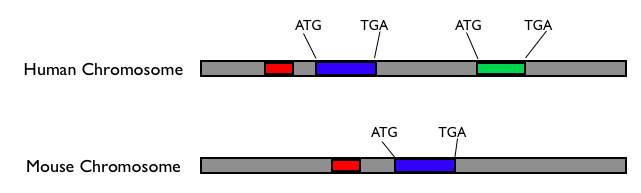
Potential protein-coding genes start with ATG and and with TGA; the blue gene is conserved between human and mouse, while the green gene is not. The blue gene is probably an authentic protein-coding gene, while the green one may not be. The red sequence is not a protein coding sequence, but it is conserved between mouse and human, thus it may be functionally important.
One important problem is choosing the right organisms. Let's say that we're comparing the chimp genome with the human genome and we find a region of DNA that is very similar in the two genomes. It's possible that this region is similar because it is functionally important, or it could be that this region simply hasn't changed much yet because humans and chimps diverged so recently (on an evolutionary scale - 5-6 million years ago). To resolve this issue, we look at the genomes of other organisms, such the mouse or dog. The human and dog genomes diverged much farther back in time, so DNA sequences that are conserved among these two genomes are very likely to be functionally relevant. (On the other hand, the human and dog lineages have diverged enough that some functionally important sequences may not be that similar, which is why we look at an intermediate genome, like mouse or rat.)
This kind of comparison has been very useful in yeast (check out this paper and this one), helping researchers to better define protein-coding genes and non-coding regulatory elements. With this knowledge, we can focus our experimental efforts on systematically characterizing these genomic elements.
In a nutshell, this is one rationale for sequencing genomes. In the next installment, I'll talk about how genomes help us understand evolution, and why the dog genome in particular is useful for studying mammalian evolution.
Bad Faith
Federal Judge John Jones has ruled, the old school board in Dover has been voted out, and the town can try to get back to normal. According to a story in The New York Times, many Dover residents are agreeing to disagree: "We're not walking around glaring at each other. We just have different political views on this," stated one resident. A Dover high school student: "We said to one another, 'Let's not let this divide our friendship.'"
Is this an issue where reasonable people can agree to disagree? This issue is over whether intelligent design should be taught as science in public school science classes, and this is absolutely not a situation where two reasonable sides can disagree in good faith. Those who argue that Intelligent Design is scientific and should be taught are badly uninformed, every single one of them, about what modern evolutionary biology actually is. Judge Jones found that the school board members who pushed for Dover's intelligent design policy could not even coherently explain what intelligent design was. As the Judge stated in his opinion:
"Furthermore, Board members somewhat candidly conceded that they lacked sufficient background in science to evaluate ID, and several of them testified with equal frankness that they failed to understand the substance of the curriculum change..." (p. 121)
These board members testified that they hardly looked at the ID book at issue Of Pandas and People, and they testified that they did not "know much about intelligent design." Yet they adopted the curriculum change anyway, over the objection of the science faculty in the district, believing that it would enhance critical thinking. As the Judge also pointed out, Board members lied under oath to conceal their religious motivation for the change. Is this how reasonable people, who can reasonably disagree, behave?
How about the Intelligent Design professionals - people like Michael Behe who are supported by the Discovery Institute? While they may be experts on Intelligent Design, time and again they have demonstrated they they are uninformed about the most basic aspects of the theory they claim to be astutely criticizing. William Dembski is a mathematician and philosopher with no biology training whose arguments frequently demonstrate a misunderstanding of basic evolution; Jonathan Wells has a PhD in biology which he obtained in order to "destroy Darwinism", but he wrote a book, Icons of Evolution which contains misunderstandings that a sophomore biology major studying evolution would find obvious (see this critique of Wells's book); Michael Behe is a biochemist with little formal training in evolution, who allowed himself to be listed as both an author and reviewer of Pandas even though he admitted the book has some serious errors regarding the predictions of evolutionary theory. Yet when asked by the plaintiff's attorney to explain the nature of the errors in the book, Behe's response was the absolutely false statement that evolution doesn't make any predictions.
If you are a reasonable person serious about a critique of evolution, you have to understand it before you debunk it, otherwise you're attacking a straw man.
On one side of this issue, the people of Dover (and all over this country) are acting in bad faith - they are not disagreeing over something reasonable people disagree over. Most of them can't define what intelligent design is, yet, while conceding their ignorance on the issue, insist that it is a valid scientific alternative to evolution. That's bad faith. Most of these same people defend the teaching of intelligent design in religious terms - as Judge Jones pointed out, the vast majority of letters to the local papers discussed this issue in religious terms. "Children should not be taught that we came from monkeys when that's flat-out not true," stated one Dover mother to The New York Times. She could not possibly have any basis other than her religious beliefs for denying the common ancestry of humans and apes. In other words, these people want the teaching of evolution balanced with a doctrine they know to be religious in a science class composed of students who don't all share that religious outlook. That's bad faith.
One side can be just plain wrong. And as demonstrated by Judge Jones, a political friend of Republicans Tom Ridge and Rick Santorum, a George W. Bush judicial appointee who attends a Lutheran church with his wife, reasonable Christian Republicans can only come to one reasonable conclusion - in science class, ID cannot masquerade as science.
Is this an issue where reasonable people can agree to disagree? This issue is over whether intelligent design should be taught as science in public school science classes, and this is absolutely not a situation where two reasonable sides can disagree in good faith. Those who argue that Intelligent Design is scientific and should be taught are badly uninformed, every single one of them, about what modern evolutionary biology actually is. Judge Jones found that the school board members who pushed for Dover's intelligent design policy could not even coherently explain what intelligent design was. As the Judge stated in his opinion:
"Furthermore, Board members somewhat candidly conceded that they lacked sufficient background in science to evaluate ID, and several of them testified with equal frankness that they failed to understand the substance of the curriculum change..." (p. 121)
These board members testified that they hardly looked at the ID book at issue Of Pandas and People, and they testified that they did not "know much about intelligent design." Yet they adopted the curriculum change anyway, over the objection of the science faculty in the district, believing that it would enhance critical thinking. As the Judge also pointed out, Board members lied under oath to conceal their religious motivation for the change. Is this how reasonable people, who can reasonably disagree, behave?
How about the Intelligent Design professionals - people like Michael Behe who are supported by the Discovery Institute? While they may be experts on Intelligent Design, time and again they have demonstrated they they are uninformed about the most basic aspects of the theory they claim to be astutely criticizing. William Dembski is a mathematician and philosopher with no biology training whose arguments frequently demonstrate a misunderstanding of basic evolution; Jonathan Wells has a PhD in biology which he obtained in order to "destroy Darwinism", but he wrote a book, Icons of Evolution which contains misunderstandings that a sophomore biology major studying evolution would find obvious (see this critique of Wells's book); Michael Behe is a biochemist with little formal training in evolution, who allowed himself to be listed as both an author and reviewer of Pandas even though he admitted the book has some serious errors regarding the predictions of evolutionary theory. Yet when asked by the plaintiff's attorney to explain the nature of the errors in the book, Behe's response was the absolutely false statement that evolution doesn't make any predictions.
If you are a reasonable person serious about a critique of evolution, you have to understand it before you debunk it, otherwise you're attacking a straw man.
On one side of this issue, the people of Dover (and all over this country) are acting in bad faith - they are not disagreeing over something reasonable people disagree over. Most of them can't define what intelligent design is, yet, while conceding their ignorance on the issue, insist that it is a valid scientific alternative to evolution. That's bad faith. Most of these same people defend the teaching of intelligent design in religious terms - as Judge Jones pointed out, the vast majority of letters to the local papers discussed this issue in religious terms. "Children should not be taught that we came from monkeys when that's flat-out not true," stated one Dover mother to The New York Times. She could not possibly have any basis other than her religious beliefs for denying the common ancestry of humans and apes. In other words, these people want the teaching of evolution balanced with a doctrine they know to be religious in a science class composed of students who don't all share that religious outlook. That's bad faith.
One side can be just plain wrong. And as demonstrated by Judge Jones, a political friend of Republicans Tom Ridge and Rick Santorum, a George W. Bush judicial appointee who attends a Lutheran church with his wife, reasonable Christian Republicans can only come to one reasonable conclusion - in science class, ID cannot masquerade as science.
Subscribe to:
Posts (Atom)


